

Showing posts with label feature. Show all posts
Showing posts with label feature. Show all posts
Thursday, August 19, 2010
Celebrations for the 65thbirthday of Daw Aung San Suu Kyi
Early in the morning on June 19, more than ten girls wearing red Mon longhis (sarongs) ran out of our house and piled into the car waiting outside. After five minutes driving through the village, we arrived in front of the compound where celebrations were underway for Aung San SuuKyi’s 65th birthday.
Early in the morning on June 19, more than ten girls wearing red Mon longhis (sarongs) ran out of our house and piled into the car waiting outside. After five minutes driving through the village, we arrived in front of the compound where celebrations were underway for Aung San SuuKyi’s 65th birthday.
When we got out of the car and walk through the gates, we can see a house made of black wood. The surrounding area is hilly and green, and over to our left we can see the roof of the monastery above the trees.
In front of the house there were two tables. One table displayed a statement issued by Women’s League of Burma for Daw Suu’s birthday, a sign-in book and posters of Daw Suu. On the other table was a ballot box and postcards with an image of a voting ballot on the front with the options of “Daw Suu’s Real Election” or “Than Shwe’s Military Selection”. On the back of the cards were calls from the organizations of Burma’s democracy movement to international governments. I asked the woman behind the table about the cards and the ballot box. She explained that people can mark the cards and send them to Dr. Surin Pitsuwan, the Secretary-General of ASEAN. A member of the ceremony committee said that, “The objective of the postcards is to communicate our refusal to recognize the legitimacy of the 2010 election or to acknowledge the results. The people of Burma want to draw the attention of the international community in the hopes it will pressure the SPDC into entering discussions with the ethnic minority groups.” I asked a Mon medical nurse about how she marked her card. She said, “I support Daw Suu because she is trying to bring about democracy in Burma and she is a representative of ethnic communities. That is why I voted for her.”
The 2010 election will be neither free or fair. The State Peace and Development Council (SPDC) refuses to release over 2100 political prisoners including Daw Aung San Suu Kyi, launches frequent attacks against the ethnic communities, and attempts to force ethnic armies to join the new “Border Guard Force”. The regime has not reviewed the 2008 constitution, widely recognized to be undemocratic, and it has not engaged in a dialogue with the organizations of the democracy movement or the ethnic minorities. Rather than providing an opportunity for the Burma’s citizens to make their voice heard, the 2010 elections will merely perpetuate and consolidate the military’s stranglehold on the nation and ensure the continued repression of its people.
On March 8 this year, the military government passed new election laws. The groups who want to establish and register as a party must endorse the 2008 constitution. The constitution ensures that the armed forces will automatically hold 25% of the seats in the House of Representatives and the Senate, and guarantees 33% of the seats in all state or division parliaments for the armed forces. As such, many ethnic groups refuse to endorse the constitution and are barred from establishing or registering as a party in the 2010 elections, thus leaving many ethnic minorities without a chance for representation.
Standing on the stage beneath the banner, the committee member spoke to the more than seventy people from New Mon State Party and other border organizations:
Despite the obstacles Daw Suu must overcome as a woman in a conservative society, she never gives up fighting for freedom for the Burmese people under military rule. She has given up her own freedom for all the people of Burma. She does not share our ethnicity, but she still represents ethnic minorities in the struggle for democracy for our country. That is why we honor her and celebrate her birthday.
Committee members gave every person a candle and then a communal prayer was said for Daw Aung San Suu Kyi’s long life and health. The official celebrations ended with students who are about to graduate from high school cutting the birthday cake. As is traditional in Mon society, the celebration committee provided lunch for everyone who attended. As I opened my lunch box, the smell of delicious chicken curry and rice came wafting out. Sitting and eating this meal with my friends, I was reminded of many times spent eating spicy Mon Curry in the rice paddy with my family in Burma.
During lunch, I chatted with some students about the celebration. One young man said that he was inspired by Daw Aung San Su Kyi: “I have learnt a lot today. I didn’t know so much about Daw Suu before, but now I do and I’m so happy and proud of her work for the people of Burma.” A Mon girl chimed in agreeing, “She is a brave woman. We should try to be more like her, and to encourage others to be like her.”
Daw Aung San Suu Kyi’s 65th birthday was celebrated not just along the border, but in other towns and cities in Thailand and all around the world. While all these people celebrated her birthday with parties and celebrations, Daw Suu herself spent her 65th birthday under house arrest. The most recent term of her house arrest was supposed to end on May 27, 2009. Despite this, however, her sentence was unlawfully extended after more false charges were brought regarding the American man who swam across Lake Inya to arrive at her compound uninvited. After a short period of detention at the notorious Insein prison, she was once again placed under house arrest and there she remains for an indefinite period, until the military regime sees fit to grant her freedom.
The chairman of the celebration committee praised Daw Aung San Suu Kyi for her commitment to the goals of freedom and democracy: “Daw Suu and the National League for Democracy decided to boycott the 2010 elections, because they will not be free or fair. We support Daw Suu’s decision and we have hope and faith that she will continue to fight for the people of Burma and against our military oppressors.”
At the end of the day, after the celebrations were over, I got to thinking about Daw Aung San Suu Kyi and the example she sets. I think that Mon women should try to be more like Daw Suu, to bring about freedom for the Mon people through bravery and sacrifice. I hope that Daw Suu can spend her 66th birthday among friends and relatives. I hope she can spend it free.
Read more...


Sunday, July 25, 2010
HIV child hopes for the future
“I don’t want to take a lot of medicine. It is very boring. I just want to be the same as the other children. They don’t have to take medicine like me,” said Mi Saw, a Mon child who lives in the Safe House run by the Thailand-Burma Border Consortium (TBBC), near Huay Malai in Kanchnaburi province, Thailand.
Mi Saw* is 13-years-old and HIV positive. She lived in Halockanee, an Internally Displaced Person’s (IDP) resettlement site, on the Burmese side of the Thai-Burma border with her mother and father before moving to the Safe House. Her parents were diagnosed with AIDS when she was 5-years-old. Her mother died first and Mi Saw was left to care for her ailing fatherHIV child hopes for the future
July 16, 2010
Chan Chan, WCRP
“I don’t want to take a lot of medicine. It is very boring. I just want to be the same as the other children. They don’t have to take medicine like me,” said Mi Saw, a Mon child who lives in the Safe House run by the Thailand-Burma Border Consortium (TBBC), near Huay Malai in Kanchnaburi province, Thailand.
Mi Saw* is 13-years-old and HIV positive. She lived in Halockanee, an Internally Displaced Person’s (IDP) resettlement site, on the Burmese side of the Thai-Burma border with her mother and father before moving to the Safe House. Her parents were diagnosed with AIDS when she was 5-years-old. Her mother died first and Mi Saw was left to care for her ailing father. She is the only daughter in her family and when her father died, she had no close relatives to live with. The teacher from her village told her about the Safe House and she arrived there in February 2006.
“I am in grade 3 at the Thai-Christian School near the Safe house,” said Mi Saw. “When I arrived here I was crying, but now I am happy to stay here with my friends. I can speak 3 languages: Burmese, Thai and Karen. I go to school from 8am to 4pm and when I finish, I go to my room to do my homework and play with my friends. When I have free time, I make Karen bags and Karen T-shirts to help the Safe House.”
Mi Saw goes to the Kwai River Christian hospital in Sangkhlaburi, Kanchanaburi Province, monthly, there she is given the medicine she needs to control the HIV. She has to take pills twice a day, at 7 in the morning and 7 in the evening. The white pills are very large and they stick in her throat. She does not like to take them, but she knows they help her. When she first arrived at the safe house, she had lesions all over her body. These have now gone thanks to the medicine.
Ma Joe Phyu, a 49-year-old Karen woman from Kyain Seikgyi Township, Karen State, is responsible for the children who live at the Safe House:
“I am their teacher. My duty is to care for 30 children including 3 children who are HIV positive. I teach them on the weekends, prepare food, and make sure they are healthy … I also teach them Burmese, English, Karen, and Mathematics. We started the children’s Safe House program in 2005 with eight children, we now have 30. I take care of them as if they were my own children. I always tell them to try hard at school because education is so important for their future. I can tell them to try hard many times, but it is up to them. If they work hard they’ll have a chance to attend high school and university. If they study hard and succeed in school their futures will be better.”
TBBC provides the medicine for the children at the Safe House and God’s Kids Christian organization provides the funds for their education, food and clothes.
In the past, most of the HIV/AIDS patients that came to the Safe House clinic were men, but now the clinic is admitting more women. Daw Paw Lu Lu, the coordinator and co-founder of the Safe House, believes this increase is due to the rise in women migrating to and working in Thailand.
“Some men don’t control themselves and they contract HIV, and they give it to their wives who then pass it on to their children. We feel for the innocent children who are born with HIV. It is not good for their future. In 2009, a 5-year-old child and a 2-year-old child arrived to the Safe House after both their parents died from HIV/AIDS. The children had also contracted HIV from the parents. They now go to the hospital every month. The 5-year-old child is in grade one at the Thai-Christian school. There has been an increase in children being admitted who have contracted HIV/AIDS from their parents” Said Daw Paw Lu Lu.
In her room, Mi Saw keeps a photo of her old teacher from her village in Halockhanee by her bed. She looks at the photo and talks about her teacher often.
“Now I am in grade three. When I grow up I want to be a teacher. This is my wish. I would like to teach the children like me who have no parents and I would like to help those children like my teacher helped me.”
Read more...
Mi Saw* is 13-years-old and HIV positive. She lived in Halockanee, an Internally Displaced Person’s (IDP) resettlement site, on the Burmese side of the Thai-Burma border with her mother and father before moving to the Safe House. Her parents were diagnosed with AIDS when she was 5-years-old. Her mother died first and Mi Saw was left to care for her ailing fatherHIV child hopes for the future
July 16, 2010
Chan Chan, WCRP
“I don’t want to take a lot of medicine. It is very boring. I just want to be the same as the other children. They don’t have to take medicine like me,” said Mi Saw, a Mon child who lives in the Safe House run by the Thailand-Burma Border Consortium (TBBC), near Huay Malai in Kanchnaburi province, Thailand.
Mi Saw* is 13-years-old and HIV positive. She lived in Halockanee, an Internally Displaced Person’s (IDP) resettlement site, on the Burmese side of the Thai-Burma border with her mother and father before moving to the Safe House. Her parents were diagnosed with AIDS when she was 5-years-old. Her mother died first and Mi Saw was left to care for her ailing father. She is the only daughter in her family and when her father died, she had no close relatives to live with. The teacher from her village told her about the Safe House and she arrived there in February 2006.
“I am in grade 3 at the Thai-Christian School near the Safe house,” said Mi Saw. “When I arrived here I was crying, but now I am happy to stay here with my friends. I can speak 3 languages: Burmese, Thai and Karen. I go to school from 8am to 4pm and when I finish, I go to my room to do my homework and play with my friends. When I have free time, I make Karen bags and Karen T-shirts to help the Safe House.”
Mi Saw goes to the Kwai River Christian hospital in Sangkhlaburi, Kanchanaburi Province, monthly, there she is given the medicine she needs to control the HIV. She has to take pills twice a day, at 7 in the morning and 7 in the evening. The white pills are very large and they stick in her throat. She does not like to take them, but she knows they help her. When she first arrived at the safe house, she had lesions all over her body. These have now gone thanks to the medicine.
Ma Joe Phyu, a 49-year-old Karen woman from Kyain Seikgyi Township, Karen State, is responsible for the children who live at the Safe House:
“I am their teacher. My duty is to care for 30 children including 3 children who are HIV positive. I teach them on the weekends, prepare food, and make sure they are healthy … I also teach them Burmese, English, Karen, and Mathematics. We started the children’s Safe House program in 2005 with eight children, we now have 30. I take care of them as if they were my own children. I always tell them to try hard at school because education is so important for their future. I can tell them to try hard many times, but it is up to them. If they work hard they’ll have a chance to attend high school and university. If they study hard and succeed in school their futures will be better.”
TBBC provides the medicine for the children at the Safe House and God’s Kids Christian organization provides the funds for their education, food and clothes.
In the past, most of the HIV/AIDS patients that came to the Safe House clinic were men, but now the clinic is admitting more women. Daw Paw Lu Lu, the coordinator and co-founder of the Safe House, believes this increase is due to the rise in women migrating to and working in Thailand.
“Some men don’t control themselves and they contract HIV, and they give it to their wives who then pass it on to their children. We feel for the innocent children who are born with HIV. It is not good for their future. In 2009, a 5-year-old child and a 2-year-old child arrived to the Safe House after both their parents died from HIV/AIDS. The children had also contracted HIV from the parents. They now go to the hospital every month. The 5-year-old child is in grade one at the Thai-Christian school. There has been an increase in children being admitted who have contracted HIV/AIDS from their parents” Said Daw Paw Lu Lu.
In her room, Mi Saw keeps a photo of her old teacher from her village in Halockhanee by her bed. She looks at the photo and talks about her teacher often.
“Now I am in grade three. When I grow up I want to be a teacher. This is my wish. I would like to teach the children like me who have no parents and I would like to help those children like my teacher helped me.”
Read more...
Friday, July 2, 2010
The child’s life, hopeless in the future
Early in the morning I was awoken by the chickens beautiful singing. I opened my eyes and looked around my room. Through the window I could see the mist falling to the earth in small droplets and my neighbors cooking rice or praying to the monks. I stood up and headed to the bathroom for a shower. After, I met a friend who was accompanying me to Bleh-donephai, a resettlement site near the Thai-Burma border. My friend was wearing two jackets to protect her from the cold, but she said she could still feel the cool air through her layers.
I felt the air and tried to imagine how people without warm clothes were able to survive. My friend and I chatted as we waited for the car to pick us for our trip. I could not see clearly down the road because of the mist.
The journey took a couple of hours and our first stop was in a small Karen village in Huay malia. I noticed that most of the houses were made of wood and bamboo. Near each house was a small patch of vegetables where Roselle and sweet potato plants were growing. We looked around the village for an hour or so and then continued our trip.
Half an hour later we arrived at the small Mon village of Bleh-donephai. The 100 or so houses in the village are in a New Mon State Party (NMSP) controlled area. The houses were built in the same style as the previous village only with bamboo and thatch grass instead.
As I walked through the village I noticed that their drinking water came from two rivers that flowed through the middle and end of the town. A wooden bridge spans across the middle river, connecting either side of town and mountains encompass the landscape.
The villagers’ main sources of income are rice cultivation along the hillside and hunting. Most villagers hunt boars, frogs, rats, deer, and monkeys.
Jonda Non, a 15-year-old Mon girl, lives in Bleh-donephai. She shares a small hut with her mother, 2 sisters (3-months-old and 6-years-old) and her 9-year-old brother. Her father is a hunter and normally sleeps in the forest.
Sadly, Jonda Non has never tasted meat and her father’s inconsistent hunting is barely enough to support the family. “When I was 5-years-old, my father fell and rolled down a mountain. He broke his leg and he could not work [hunt] for a while. My family decided to sell our property to find another job in a different village. We walked for three days to get to this new village Bleh-donephai and decided to live here.
I want to go back to my old village to see my relatives, but we have no money or time to visit them,” said Jonda Non.
Jonda Non’s hut is at the end of the village near the river. Large grass leaves cover the roof of her small abode while the floor and structure are made of bamboo, there are no doors. Jonda Non and her family moved into the one room hut a couple of months ago after another family had abandoned it.
As she invited my friend and I inside I noticed pots and blankets divided the hut into cooking and sleeping areas. In the sleeping area there was one blanket, two pillows and a small box. The kitchen consisted of two pots -one for washing, one for cleaning- and a water bucket. I noticed several ants floating in the washing pot.
As I interviewed Jonda Non, her 3-month-old baby sister cried in her arms. Their mother had not yet returned from work and there was no food in the house to eat. In hopes of cooing the baby, Jonda Non sent her 6-year-old sister to borrow sugar from the local shop, but 10 minutes later the child returned empty handed; the shop owner had refused to give her the sugar on credit.
Jonda Non filled a bottle with warm water and nursed the baby anyway. As the baby fed, Jonda Non explained to me how she tries to balance school and family responsibilities.
“I am in 3rd standard at Bleh-donephai Mon National Elementary School. I want to continue my education till I graduate, but my family is so poor, I always have to miss school to help earn money for food. Often, I have to go to the forest with my mother during school to pick and sell grass leaves so we can buy food. Before I go to school, I have to cook, help with my sisters and wash clothes.
I’m always late to school because I have to do all of the housework. Sometime my teacher beats me with a small bamboo rod because of my constant tardiness.” Said Jonda Non. Normally students in 3rd standard are 8-years-old, but in Bleh-donephai most children have to work, help their family and attend school. Because of these other obligations, students, like Jonda Non, often fall behind in their studies and find it difficult to consistently attend school and keep up with their peer group.
Bleh-donephai’s elementary school is in the middle of the village and is surrounded by trees and a playground. On Mondays and Fridays all students and teachers wear Mon ethnic clothes to school.
Jonda Non cannot afford nor has ever owned Mon clothes. Consequently every Monday and Friday the students tease her, “don’t sit with us, you are so dirty. If you want to sit with us, you should wear Mon clothes like us.” She tells them, “I don’t’ have any Mon clothes to wear,” but they continue the harassment every week. She explained to me, “I have never asked my mother to buy Mon clothes for me. I know she has no extra money.”
When Jonda Non was in 2nd standard she was awarded a Burmese sarong for being the top student in her class. Unfortunately at that time, her family had no money for food and both her parents were sick. Though she adored the sarong, she secretly sold it to buy food for her family.
Jonda will finish 3rd standard this March and the school in Bleh-donephai only offers classes up to 4th standard. The middle school is in a neighboring village a half hour’s walk away. “I am not sure what to do about the up coming year. I have to choose between continuing my education and helping my family. I cannot do both, and I am worried about my future. Should I continue to help my family or my schooling?” said Jonda Non as she tried to hide her tears from her mother.
“I feel so bad for my child. I want her to study like other children. Now my children have no chance to study and they have to work like adults. They do not have enough food like other children because I cannot properly support them,” said Jonda Non mother.
We finished talking around 4:00pm and as my friend I headed to the car the sun was setting into the mountains. When I arrived home, I turned on the lights and ate dinner with my friend. Before I fell asleep, I remembered what Jonda Non said “I would like to be a doctor because I want to treat poor people in villages that do not have health care. I think my dream will never come true because of my family’s financial situation.”
Read more...
I felt the air and tried to imagine how people without warm clothes were able to survive. My friend and I chatted as we waited for the car to pick us for our trip. I could not see clearly down the road because of the mist.
The journey took a couple of hours and our first stop was in a small Karen village in Huay malia. I noticed that most of the houses were made of wood and bamboo. Near each house was a small patch of vegetables where Roselle and sweet potato plants were growing. We looked around the village for an hour or so and then continued our trip.
Half an hour later we arrived at the small Mon village of Bleh-donephai. The 100 or so houses in the village are in a New Mon State Party (NMSP) controlled area. The houses were built in the same style as the previous village only with bamboo and thatch grass instead.
As I walked through the village I noticed that their drinking water came from two rivers that flowed through the middle and end of the town. A wooden bridge spans across the middle river, connecting either side of town and mountains encompass the landscape.
The villagers’ main sources of income are rice cultivation along the hillside and hunting. Most villagers hunt boars, frogs, rats, deer, and monkeys.
Jonda Non, a 15-year-old Mon girl, lives in Bleh-donephai. She shares a small hut with her mother, 2 sisters (3-months-old and 6-years-old) and her 9-year-old brother. Her father is a hunter and normally sleeps in the forest.
Sadly, Jonda Non has never tasted meat and her father’s inconsistent hunting is barely enough to support the family. “When I was 5-years-old, my father fell and rolled down a mountain. He broke his leg and he could not work [hunt] for a while. My family decided to sell our property to find another job in a different village. We walked for three days to get to this new village Bleh-donephai and decided to live here.
I want to go back to my old village to see my relatives, but we have no money or time to visit them,” said Jonda Non.
Jonda Non’s hut is at the end of the village near the river. Large grass leaves cover the roof of her small abode while the floor and structure are made of bamboo, there are no doors. Jonda Non and her family moved into the one room hut a couple of months ago after another family had abandoned it.
As she invited my friend and I inside I noticed pots and blankets divided the hut into cooking and sleeping areas. In the sleeping area there was one blanket, two pillows and a small box. The kitchen consisted of two pots -one for washing, one for cleaning- and a water bucket. I noticed several ants floating in the washing pot.
As I interviewed Jonda Non, her 3-month-old baby sister cried in her arms. Their mother had not yet returned from work and there was no food in the house to eat. In hopes of cooing the baby, Jonda Non sent her 6-year-old sister to borrow sugar from the local shop, but 10 minutes later the child returned empty handed; the shop owner had refused to give her the sugar on credit.
Jonda Non filled a bottle with warm water and nursed the baby anyway. As the baby fed, Jonda Non explained to me how she tries to balance school and family responsibilities.
“I am in 3rd standard at Bleh-donephai Mon National Elementary School. I want to continue my education till I graduate, but my family is so poor, I always have to miss school to help earn money for food. Often, I have to go to the forest with my mother during school to pick and sell grass leaves so we can buy food. Before I go to school, I have to cook, help with my sisters and wash clothes.
I’m always late to school because I have to do all of the housework. Sometime my teacher beats me with a small bamboo rod because of my constant tardiness.” Said Jonda Non. Normally students in 3rd standard are 8-years-old, but in Bleh-donephai most children have to work, help their family and attend school. Because of these other obligations, students, like Jonda Non, often fall behind in their studies and find it difficult to consistently attend school and keep up with their peer group.
Bleh-donephai’s elementary school is in the middle of the village and is surrounded by trees and a playground. On Mondays and Fridays all students and teachers wear Mon ethnic clothes to school.
Jonda Non cannot afford nor has ever owned Mon clothes. Consequently every Monday and Friday the students tease her, “don’t sit with us, you are so dirty. If you want to sit with us, you should wear Mon clothes like us.” She tells them, “I don’t’ have any Mon clothes to wear,” but they continue the harassment every week. She explained to me, “I have never asked my mother to buy Mon clothes for me. I know she has no extra money.”
When Jonda Non was in 2nd standard she was awarded a Burmese sarong for being the top student in her class. Unfortunately at that time, her family had no money for food and both her parents were sick. Though she adored the sarong, she secretly sold it to buy food for her family.
Jonda will finish 3rd standard this March and the school in Bleh-donephai only offers classes up to 4th standard. The middle school is in a neighboring village a half hour’s walk away. “I am not sure what to do about the up coming year. I have to choose between continuing my education and helping my family. I cannot do both, and I am worried about my future. Should I continue to help my family or my schooling?” said Jonda Non as she tried to hide her tears from her mother.
“I feel so bad for my child. I want her to study like other children. Now my children have no chance to study and they have to work like adults. They do not have enough food like other children because I cannot properly support them,” said Jonda Non mother.
We finished talking around 4:00pm and as my friend I headed to the car the sun was setting into the mountains. When I arrived home, I turned on the lights and ate dinner with my friend. Before I fell asleep, I remembered what Jonda Non said “I would like to be a doctor because I want to treat poor people in villages that do not have health care. I think my dream will never come true because of my family’s financial situation.”
Read more...
A home for the unwanted
“I want to go back home. Can you take me?” a mentally challenged woman asked me while my friend and I were visiting the Safe House near Huay Malai in Kanchnaburi province, Thailand. But for this woman, and many of her fellow patients, the Safe House serves as the only “home” such individuals can find.
It had taken us about 45 minutes to travel to the Safe House by motorbike. When we arrived the manager, Daw Paw Lu Lu, was accompanying an HIV positive patient to the Kwai River Christian Hospital, a five minutes drive from the Safe House. As we waited to interview her, staff from the Safe House gave us a tour of the organization’s grounds and projects. Small houses and buildings connected by gardening projects, fish banks and a pig farm scattered the Safe House property. When Daw Paw Lu Lu returned we sat down and she patiently answered my questions about the Safe House, while my friend photographed the weaving centre.
Daw Paw Lu Lu, a 61-year-old Karen woman, the Thailand Burma Border Consortium (TBBC), and the Christian Church of Thailand, founded the Safe House in 1993. The Safe House was a coordinated effort of the three organizations to aid the increasing number of displaced migrants struggling to survive on and around the Thailand-Burma border. Over the past 17 years, the Safe House has treated over 1500 patients suffering from varying illnesses. Patients of the Safe House are members of various nationalities, ethnicities and religions; presently there are Mon, Shan, Karen, Arakan, Akha, Thai, Malay, Khmer and Indian patients at the residence.
Daw Paw Lu Lu explained to me that the aim of the Safe House is to help mentally impaired, or terminally ill, individuals who have no other option. This includes individuals suffering from: HIV/AIDS, Post-traumatic Stress Disorder, Tuberculosis (TB), schizophrenia, mania, epilepsy, intellectual disabilities, and various other ailments.
In the past, most of the HIV/AIDS patients that came to the clinic were men but now the clinic is admitting more women. Daw Paw Lu Lu thinks the increase is due to the rise in women migrating to and working in Thailand.
Since she was 27, Daw Paw Lu Lu has been studying and providing healthcare on and around the Thailand-Burma border. Initially running the Safe House alone, she now has a round-the-clock staff of 14. Other then caring for patients, Safe House staff runs various recreational, rehabilitation and vocational programs to aid in the patients’ recovery. Able patients can tend to the: vegetable gardens, fish banks or pig farm. Other activities include: soccer, crafts, brick making and chicken husbandry. Additionally, the Safe House’s weaving centre and loom project teaches patients how to weave Karen bags, purses, scarves and various other goods.
Ma Htin Phyu, a 22-year-old Karen women, who runs the loom project explained to me how she came to the Safe House:
One day a troop of SPDC soldiers were fighting in my village so we ran to Nu Poe refugee camp. While I was living in the camp, my aunt contacted me and invited me to live with her in Huay Malai and she told me about the Safe House. So my husband and I came, and we now live with my aunt. When I arrived, I attended the loom training and now I work at the Safe House. I don’t want to go back to my village because if I live in my village I will constantly worry about SPDC soldiers. I am very happy to work here. I also have two children who attend the Christian school in Huay Malai.” Ma Htin Phyu is from Paw Nan village, Karen State, and has worked at the Safe House for several years.
Through the weaving centre and loom project, the Safe House provides jobs and opportunities for patients to earn an income if and when they are capable. At the front of the Safe House there is a small store where all the goods from the two projects are sold. When an item is purchased the profit goes back to the maker.
In a separate building, there are 30 live-in children; some sick, some orphaned, and some merely the children of patients. TBBC provides funds so the children are able to attend the local Christian school.
“I have been working here [the Safe House] for five years. My duty is to care for the children, I teach them on the weekends, prepare food, and make sure they are healthy… Also I teach them Burmese, English, Karen, and do Math with them. I am tired, but I am happy to take care of them. They are very cute,” said Ma Joe Phyu, a 49-years-old Karen woman from Kyain Seikgyi Township, Karen State, who is responsible for the live in children. In total, three Safe House staff members tend to the children while they are not attending school. In an attempt to accommodate all students, the Christian school, provides language classes in Karen, Burmese, English, Thai, and Mon.
Currently the Safe House is supporting 42 patients, 19 female and 23 male with the average age of 37. There are six adults and two children with HIV/AIDS, 22 patients are mentally ill, 14 patients are suffering from an assortment of chronic physical illnesses. Additionally there are 10 chronically sick elderly patients over the age of 70. TBBC provides the: staff, rent, food, clothes, furniture, appliances, cutlery, medicine, and medical supplies for occupants of the Safe House. The Safe House is currently in the midst of a 5-year plan to become independent.
Potential patients have to meet strict criteria before the Safe House is able to accept them as in-patients. Admitted patients usually do not have a home, family or any kind of support network. Patients that cannot or do not recover, are able to rely on or live at the Safe House for extended periods of time.
Land limitations are currently creating difficulties for the Safe House and its occupants. The 22 mentally ill patients share two cramped dorm like spaces, which are divided by sex. Daw Paw Lu Lu explained that due to the confined quarters, fights are quite common.
“We do not have enough land and it causes problems. Also, the land that we use is rented and the landlord may want it back in the future. We also do not have enough toilets.” Said Daw Paw Lu Lu. For the 42 occupants and 14 staff there are only four toilets, two of which are inside the mentally impaired patients’ male quarters. When fights break out, between the patients, or if the quarters are locked, everyone is blocked from using the toilets.
“I want to help the people who have no place to stay and no one to care for them. I try to give them a place to sleep and treat their diseases. I also try to help migrant workers who have problems and make it so they can stay in our Safe House comfortably.” Said Daw Paw Lu Lu.
By Chan Chan
Read more...
It had taken us about 45 minutes to travel to the Safe House by motorbike. When we arrived the manager, Daw Paw Lu Lu, was accompanying an HIV positive patient to the Kwai River Christian Hospital, a five minutes drive from the Safe House. As we waited to interview her, staff from the Safe House gave us a tour of the organization’s grounds and projects. Small houses and buildings connected by gardening projects, fish banks and a pig farm scattered the Safe House property. When Daw Paw Lu Lu returned we sat down and she patiently answered my questions about the Safe House, while my friend photographed the weaving centre.
Daw Paw Lu Lu, a 61-year-old Karen woman, the Thailand Burma Border Consortium (TBBC), and the Christian Church of Thailand, founded the Safe House in 1993. The Safe House was a coordinated effort of the three organizations to aid the increasing number of displaced migrants struggling to survive on and around the Thailand-Burma border. Over the past 17 years, the Safe House has treated over 1500 patients suffering from varying illnesses. Patients of the Safe House are members of various nationalities, ethnicities and religions; presently there are Mon, Shan, Karen, Arakan, Akha, Thai, Malay, Khmer and Indian patients at the residence.
Daw Paw Lu Lu explained to me that the aim of the Safe House is to help mentally impaired, or terminally ill, individuals who have no other option. This includes individuals suffering from: HIV/AIDS, Post-traumatic Stress Disorder, Tuberculosis (TB), schizophrenia, mania, epilepsy, intellectual disabilities, and various other ailments.
In the past, most of the HIV/AIDS patients that came to the clinic were men but now the clinic is admitting more women. Daw Paw Lu Lu thinks the increase is due to the rise in women migrating to and working in Thailand.
Since she was 27, Daw Paw Lu Lu has been studying and providing healthcare on and around the Thailand-Burma border. Initially running the Safe House alone, she now has a round-the-clock staff of 14. Other then caring for patients, Safe House staff runs various recreational, rehabilitation and vocational programs to aid in the patients’ recovery. Able patients can tend to the: vegetable gardens, fish banks or pig farm. Other activities include: soccer, crafts, brick making and chicken husbandry. Additionally, the Safe House’s weaving centre and loom project teaches patients how to weave Karen bags, purses, scarves and various other goods.
Ma Htin Phyu, a 22-year-old Karen women, who runs the loom project explained to me how she came to the Safe House:
One day a troop of SPDC soldiers were fighting in my village so we ran to Nu Poe refugee camp. While I was living in the camp, my aunt contacted me and invited me to live with her in Huay Malai and she told me about the Safe House. So my husband and I came, and we now live with my aunt. When I arrived, I attended the loom training and now I work at the Safe House. I don’t want to go back to my village because if I live in my village I will constantly worry about SPDC soldiers. I am very happy to work here. I also have two children who attend the Christian school in Huay Malai.” Ma Htin Phyu is from Paw Nan village, Karen State, and has worked at the Safe House for several years.
Through the weaving centre and loom project, the Safe House provides jobs and opportunities for patients to earn an income if and when they are capable. At the front of the Safe House there is a small store where all the goods from the two projects are sold. When an item is purchased the profit goes back to the maker.
In a separate building, there are 30 live-in children; some sick, some orphaned, and some merely the children of patients. TBBC provides funds so the children are able to attend the local Christian school.
“I have been working here [the Safe House] for five years. My duty is to care for the children, I teach them on the weekends, prepare food, and make sure they are healthy… Also I teach them Burmese, English, Karen, and do Math with them. I am tired, but I am happy to take care of them. They are very cute,” said Ma Joe Phyu, a 49-years-old Karen woman from Kyain Seikgyi Township, Karen State, who is responsible for the live in children. In total, three Safe House staff members tend to the children while they are not attending school. In an attempt to accommodate all students, the Christian school, provides language classes in Karen, Burmese, English, Thai, and Mon.
Currently the Safe House is supporting 42 patients, 19 female and 23 male with the average age of 37. There are six adults and two children with HIV/AIDS, 22 patients are mentally ill, 14 patients are suffering from an assortment of chronic physical illnesses. Additionally there are 10 chronically sick elderly patients over the age of 70. TBBC provides the: staff, rent, food, clothes, furniture, appliances, cutlery, medicine, and medical supplies for occupants of the Safe House. The Safe House is currently in the midst of a 5-year plan to become independent.
Potential patients have to meet strict criteria before the Safe House is able to accept them as in-patients. Admitted patients usually do not have a home, family or any kind of support network. Patients that cannot or do not recover, are able to rely on or live at the Safe House for extended periods of time.
Land limitations are currently creating difficulties for the Safe House and its occupants. The 22 mentally ill patients share two cramped dorm like spaces, which are divided by sex. Daw Paw Lu Lu explained that due to the confined quarters, fights are quite common.
“We do not have enough land and it causes problems. Also, the land that we use is rented and the landlord may want it back in the future. We also do not have enough toilets.” Said Daw Paw Lu Lu. For the 42 occupants and 14 staff there are only four toilets, two of which are inside the mentally impaired patients’ male quarters. When fights break out, between the patients, or if the quarters are locked, everyone is blocked from using the toilets.
“I want to help the people who have no place to stay and no one to care for them. I try to give them a place to sleep and treat their diseases. I also try to help migrant workers who have problems and make it so they can stay in our Safe House comfortably.” Said Daw Paw Lu Lu.
By Chan Chan
Read more...
Thursday, July 1, 2010
A mother’s fears realized
“I don’t want to return until I have earned enough money to start a shop for my family in my hometown,” said Mi Yi, a Mon woman from Kaw-kha-lein village, Kyaikmayaw Township, Mon State, southern Burma. In Mi Yi’s hometown jobs are scarce, wages are low and most villagers survive by cultivating rice or tapping rubber trees. There are about 400 households in the village and the school goes up to 6th standard.
Three years ago Mi Yi, her daughter Mi Mon, and her husband migrated to Thailand with a broker, through the Three Pagodas Pass crossing. Mi Yi did not want to leave her village, but without a job or an income, she had no choice.
“When we were in Burma, we didn’t have enough to eat and we were indebted to our neighbors. I wanted to work in my hometown, but we had no money to open a shop. We migrated to Thailand in hopes of finding better jobs,” said Mi Yi.
When Mi Yi’s husband was a New Mon State Party (NMSP) solider they moved a lot, but there was always food on the table. After they had children, two daughters and two sons, the problems started. Severe food shortages and a lack of work, forced Mi Yi to uproot her family and move to Thailand. At the time she was very concerned about pulling her youngest daughter out of school, but she felt that moving was important for the family’s livelihood.
Mi Yi explained, “When we migrated to Thailand I took my youngest daughter too, even though she was attending school. She was very young and I was worried if I left her alone in the village she would be harassed by the male villagers.” Mi Mon, Mi Yi’s youngest daughter, is now 16-years-old and has not attended school since the family left Burma.
Mi Mon elaborated, “I had to go with them to Thailand; my sisters and brothers had already migrated. If I hadn’t gone to Thailand, I would have had to live alone in my village. I was so sad to leave school, I was 13-years-old and in 4th standard when we left Burma.”
Over the past three years, Mi Yi and her family have had various factory and construction jobs throughout Mahachai, Samu Sakhon, Thailand. At first, working without Thai ID cards, they received low wages and regularly had to hide from the police during routine factory checks.
“I remember one time while we were working the police came and checked the factory. Luckily, we escaped by running from the building. Now we have Thai ID cards and we work on construction sites building houses. We are constantly changing jobs and we never have extra money. Even though my daughter, husband and I work everyday we never have extra money. If we work today, we can eat today,” said Mi Yi.
When Mi Mon first arrived in Thailand she took care of her niece while her aunt and parents worked various jobs. After awhile, Mi Yi felt it was unsafe for her daughter to be alone in the apartment all day, so she found Mi Mon a job working beside her at a construction site. Mi Mon and her parents now work together from 8am to 6pm, each making 180baht (about 5.50 USD) per day. Of the 100 plus employees at the construction site, around 15 are also Mon. The family currently lives in a small studio apartment, which is partitioned into bedrooms by a sheet. The community they live in is predominantly Mon, and many of the cultural traditions they found in their old village persist.
On 6 of January, Mi Mon was feeling a bit ill and went to bed early. As she slept, a 50-year-old Mon man climbed through a hole in their apartment wall and into bed with her. Mi Mon explained, “Around midnight while I was deeply asleep, he came in and laid behind me. When I woke up I saw him in my bed, I was shocked and afraid of him. I ran to where my parents were sleeping and cried to my mother.”
“I know this guy… he raped a woman in our village,” Mi Yi said when she saw the man sleeping in her daughters bed. Mi Yi and her husband shouted at the man, but they could not wake him. Around 5 am, the man independently stood up and left through the front door. Mi Mon and her parents smelled alcohol on him as he departed.
The exact situation Mi Yi feared, and diligently tried to protect her daughter from, came to life in their small studio apartment. “I am depressed about the situation, my daughter is so young,” stated Mi Yi.
After the incident Mi Mon’s parents, hoping to shield their daughter from further pain, kept quiet, but the intruder did not. “My daughter told me, nothing happen with that man, but he bragged to his friend and said he slept with my daughter and held her,” added Mi Yi.
Two weeks after the incident the man’s family insisted the two be wed. The mother of the man told Mi Yi, “I want my son and your daughter to be married, if your daughter doesn’t marry my son, it’s ok, but, because of this situation, your daughter will loose face.”
In Mon culture, if a woman is sexually harassed, the elder generation strongly encourages the couple to wed. If the couple is in love, or agrees, is not a concern; it is only important that the man takes responsibility for the woman.
“I didn’t know him and I had never spoken to him before. My co-workers told me, he told them, he had a small gun, so many people are afraid of him. Nothing happened [sexually] with him and really I don’t want to marry him,” said Mi Mon. Mi Yi is supporting her daughter’s decision not to marry the man.
A couple weeks after the incident, Mi Yi filled a formal complaint with the Labor rights Promotion Network Foundation (LPN), an organization that helps migrants in Mahachai. They are now in process of suing the man for sexual harassment.
“I don’t think women, who have been sexually harassed, should be forced to marry their attacker,” said Mon Women Organization’s (MWO) Sangkhlaburi advisor, an organization that promotes Mon women’s right throughout southern Burma and Thailand. “Sometimes, in these situations, after the marriage, the man runs away and the woman are left alone to raise the child, and, the community judges her and no one supports the woman. It is a very difficult situation … and as far as I know, Mon culture insists women only have one husband, ever.”
According to LPN, “the majority of migrant workers in Mahachai and their families are from Burma… but Mon constitutes the biggest ethnic group in the province.” There are around 2 million Burmese migrants in Thailand and, according to The Irrawaddy, “the largest Burmese migrant community” is in Mahachai.
As WCRP and various news and watchdog organizations have repeatedly reported, instances of sexual abuse and coercion are common threats for Burmese migrants in Thailand.
Read more...
Three years ago Mi Yi, her daughter Mi Mon, and her husband migrated to Thailand with a broker, through the Three Pagodas Pass crossing. Mi Yi did not want to leave her village, but without a job or an income, she had no choice.
“When we were in Burma, we didn’t have enough to eat and we were indebted to our neighbors. I wanted to work in my hometown, but we had no money to open a shop. We migrated to Thailand in hopes of finding better jobs,” said Mi Yi.
When Mi Yi’s husband was a New Mon State Party (NMSP) solider they moved a lot, but there was always food on the table. After they had children, two daughters and two sons, the problems started. Severe food shortages and a lack of work, forced Mi Yi to uproot her family and move to Thailand. At the time she was very concerned about pulling her youngest daughter out of school, but she felt that moving was important for the family’s livelihood.
Mi Yi explained, “When we migrated to Thailand I took my youngest daughter too, even though she was attending school. She was very young and I was worried if I left her alone in the village she would be harassed by the male villagers.” Mi Mon, Mi Yi’s youngest daughter, is now 16-years-old and has not attended school since the family left Burma.
Mi Mon elaborated, “I had to go with them to Thailand; my sisters and brothers had already migrated. If I hadn’t gone to Thailand, I would have had to live alone in my village. I was so sad to leave school, I was 13-years-old and in 4th standard when we left Burma.”
Over the past three years, Mi Yi and her family have had various factory and construction jobs throughout Mahachai, Samu Sakhon, Thailand. At first, working without Thai ID cards, they received low wages and regularly had to hide from the police during routine factory checks.
“I remember one time while we were working the police came and checked the factory. Luckily, we escaped by running from the building. Now we have Thai ID cards and we work on construction sites building houses. We are constantly changing jobs and we never have extra money. Even though my daughter, husband and I work everyday we never have extra money. If we work today, we can eat today,” said Mi Yi.
When Mi Mon first arrived in Thailand she took care of her niece while her aunt and parents worked various jobs. After awhile, Mi Yi felt it was unsafe for her daughter to be alone in the apartment all day, so she found Mi Mon a job working beside her at a construction site. Mi Mon and her parents now work together from 8am to 6pm, each making 180baht (about 5.50 USD) per day. Of the 100 plus employees at the construction site, around 15 are also Mon. The family currently lives in a small studio apartment, which is partitioned into bedrooms by a sheet. The community they live in is predominantly Mon, and many of the cultural traditions they found in their old village persist.
On 6 of January, Mi Mon was feeling a bit ill and went to bed early. As she slept, a 50-year-old Mon man climbed through a hole in their apartment wall and into bed with her. Mi Mon explained, “Around midnight while I was deeply asleep, he came in and laid behind me. When I woke up I saw him in my bed, I was shocked and afraid of him. I ran to where my parents were sleeping and cried to my mother.”
“I know this guy… he raped a woman in our village,” Mi Yi said when she saw the man sleeping in her daughters bed. Mi Yi and her husband shouted at the man, but they could not wake him. Around 5 am, the man independently stood up and left through the front door. Mi Mon and her parents smelled alcohol on him as he departed.
The exact situation Mi Yi feared, and diligently tried to protect her daughter from, came to life in their small studio apartment. “I am depressed about the situation, my daughter is so young,” stated Mi Yi.
After the incident Mi Mon’s parents, hoping to shield their daughter from further pain, kept quiet, but the intruder did not. “My daughter told me, nothing happen with that man, but he bragged to his friend and said he slept with my daughter and held her,” added Mi Yi.
Two weeks after the incident the man’s family insisted the two be wed. The mother of the man told Mi Yi, “I want my son and your daughter to be married, if your daughter doesn’t marry my son, it’s ok, but, because of this situation, your daughter will loose face.”
In Mon culture, if a woman is sexually harassed, the elder generation strongly encourages the couple to wed. If the couple is in love, or agrees, is not a concern; it is only important that the man takes responsibility for the woman.
“I didn’t know him and I had never spoken to him before. My co-workers told me, he told them, he had a small gun, so many people are afraid of him. Nothing happened [sexually] with him and really I don’t want to marry him,” said Mi Mon. Mi Yi is supporting her daughter’s decision not to marry the man.
A couple weeks after the incident, Mi Yi filled a formal complaint with the Labor rights Promotion Network Foundation (LPN), an organization that helps migrants in Mahachai. They are now in process of suing the man for sexual harassment.
“I don’t think women, who have been sexually harassed, should be forced to marry their attacker,” said Mon Women Organization’s (MWO) Sangkhlaburi advisor, an organization that promotes Mon women’s right throughout southern Burma and Thailand. “Sometimes, in these situations, after the marriage, the man runs away and the woman are left alone to raise the child, and, the community judges her and no one supports the woman. It is a very difficult situation … and as far as I know, Mon culture insists women only have one husband, ever.”
According to LPN, “the majority of migrant workers in Mahachai and their families are from Burma… but Mon constitutes the biggest ethnic group in the province.” There are around 2 million Burmese migrants in Thailand and, according to The Irrawaddy, “the largest Burmese migrant community” is in Mahachai.
As WCRP and various news and watchdog organizations have repeatedly reported, instances of sexual abuse and coercion are common threats for Burmese migrants in Thailand.
Read more...
Fleeing Prying Eyes; A Mothers Search for Safety
Mi Cho*, a 40-year-old Mon woman, was born, married and gave birth to her six children in Alaesakhan village, Yebu Township, Tenasserim Division, southern Burma, however, because of increased instability throughout Mon state, she was forced to migrate to an Internally Displaced Person (IDP) area near the border of Thailand.
In January, three village militia soldiers unexpectedly paid a visit to Mi Cho’s husband. Thinking it was a friendly visit, her husband let the militia soldiers into his house without hesitation. Once inside the soldiers said, “We are here to arrest you,” not taking the charge seriously, because all previous encounters had been social, her husband did not resist the arrest. The soldiers then drew a knife and took him into custody.
Alaesakhan village is deemed a conflict area or “black zone” by the SPDC because of active splinters groups in the area. The SPDC mandates that all villages in conflict areas have militias, called Pyi-thu-sit, and villagers are seasonally forced to join through a lottery system. Village militia soldiers are used to fight armed splinter groups, arbitrarily arrest villagers, and patrol their village or surrounding areas.
After the arrest, Mi Cho’s husband was given to SPDC Light Infantry Battalion (LIB) No. 282. He was then accused of being in contact with the Mon National Defense Army (MNDA), an active Mon splinter group in the area, and sending them food. “My husband has not contacted any splinter group. I don’t know why they arrested him,” Mi Cho proclaimed.
According to Kaowao, LIB No. 282 is a special battalion that guards the Yadana Gas Pipeline, and surrounding area. In the past, LIB No. 282 has been ambushed by the MNDA which is led by Major Jalon Taw who broke away from the New Mon State Party (NMSP) last year.
Mi Cho was not home during her husband’s abduction, but for weeks after, militia soldiers regularly visited her house in the middle of the night. During the visits, the soldiers would threaten her, frighten her family and accuse her of also supporting the Mon splinter group. Commonly, after the man of the family is killed or goes missing, their wife and children are the next targets.
Two weeks after the abduction, a SPDC soldier from LIB No. 282 informed Mi Cho that her husband was still alive, “If you want to see your husband, you can look for him in Tavoy town,” said the soldier. She however does not think her husband will ever be free.
By February, about a month after the abduction, Mi Cho could not handle the harassment any more. With no support or belongings, Mi Cho and her six children fled to Panan pain hakot village; an Internally Displaced Person (IDP) area within the NMSP controlled area of Mon State. Her youngest son was 6-months-old when they fled.
Upon arrival in Panan pain hakot, Mi Cho reconnected with Mi Khing, a neighbor from Alaesakhan village who had fled a couple weeks before Mi Cho. Mi Khing, had not yet secured a job, but she shared her food with the newly arrived family anyway. “When I saw her, I was so sad. She was so disappointed in her life and cried to me. They have many problems, now they live in a small hut made of bamboo, the neighbors help them but they cannot find enough food,” said Mi Khing.
Before Mi Cho fled, she worked at a small rubber and Betel nut plantation, and seasonally cut grass at a neighboring farm. In her old village she could earn enough to support her family, but jobs are scarce in the IDP area. Additionally, food, healthcare, education, land rights, employment and travel are a constant struggle.
Of her six children, the oldest is 16-years-old and the youngest is now 6-months-old. Her two middle children were in 2 standard and 0 standard at a Mon National school before they migrated. In the IDP area none of her children have the opportunity to attend school.
Mi Cho confided in Mi Khing, “I am so depressed, I am also afraid to go back to my village. I am worried they [SPDC soldiers] will kill us [if we return], but our property is there [in Alaesakhan village].” Mi Khing explained that SPDC Soldiers had a meeting on the 25 February and later that day they announced, to the village, that those who had fled or plan to flee are not allowed to return.
Mi Cho does not know how long her family will be able to survive in the IDP area or where she will head next.
Unfortunately, Mi Cho’s story is identical to so many in the IDP area. Over the past 4 months, 100s of residence from NMSP controlled areas have fled to IDP areas because of increased instability in Mon State and Tenasserim Division. Recently, because of the NMSP’s refusal to transform into a Border Guard Force (BGF) for the SPCD, mass fleeing has increased and rumors continue to circulate about the longevity of the NMSP’s 15-year-old ceasefire agreement with the SPDC.
According to WCRP field reporters, most villagers flee because of village militias (forced conscription and harassment), forced labor, accusations of contacting or supporting a splinter group, and death threats from SPDC soldiers.
Read more...
In January, three village militia soldiers unexpectedly paid a visit to Mi Cho’s husband. Thinking it was a friendly visit, her husband let the militia soldiers into his house without hesitation. Once inside the soldiers said, “We are here to arrest you,” not taking the charge seriously, because all previous encounters had been social, her husband did not resist the arrest. The soldiers then drew a knife and took him into custody.
Alaesakhan village is deemed a conflict area or “black zone” by the SPDC because of active splinters groups in the area. The SPDC mandates that all villages in conflict areas have militias, called Pyi-thu-sit, and villagers are seasonally forced to join through a lottery system. Village militia soldiers are used to fight armed splinter groups, arbitrarily arrest villagers, and patrol their village or surrounding areas.
After the arrest, Mi Cho’s husband was given to SPDC Light Infantry Battalion (LIB) No. 282. He was then accused of being in contact with the Mon National Defense Army (MNDA), an active Mon splinter group in the area, and sending them food. “My husband has not contacted any splinter group. I don’t know why they arrested him,” Mi Cho proclaimed.
According to Kaowao, LIB No. 282 is a special battalion that guards the Yadana Gas Pipeline, and surrounding area. In the past, LIB No. 282 has been ambushed by the MNDA which is led by Major Jalon Taw who broke away from the New Mon State Party (NMSP) last year.
Mi Cho was not home during her husband’s abduction, but for weeks after, militia soldiers regularly visited her house in the middle of the night. During the visits, the soldiers would threaten her, frighten her family and accuse her of also supporting the Mon splinter group. Commonly, after the man of the family is killed or goes missing, their wife and children are the next targets.
Two weeks after the abduction, a SPDC soldier from LIB No. 282 informed Mi Cho that her husband was still alive, “If you want to see your husband, you can look for him in Tavoy town,” said the soldier. She however does not think her husband will ever be free.
By February, about a month after the abduction, Mi Cho could not handle the harassment any more. With no support or belongings, Mi Cho and her six children fled to Panan pain hakot village; an Internally Displaced Person (IDP) area within the NMSP controlled area of Mon State. Her youngest son was 6-months-old when they fled.
Upon arrival in Panan pain hakot, Mi Cho reconnected with Mi Khing, a neighbor from Alaesakhan village who had fled a couple weeks before Mi Cho. Mi Khing, had not yet secured a job, but she shared her food with the newly arrived family anyway. “When I saw her, I was so sad. She was so disappointed in her life and cried to me. They have many problems, now they live in a small hut made of bamboo, the neighbors help them but they cannot find enough food,” said Mi Khing.
Before Mi Cho fled, she worked at a small rubber and Betel nut plantation, and seasonally cut grass at a neighboring farm. In her old village she could earn enough to support her family, but jobs are scarce in the IDP area. Additionally, food, healthcare, education, land rights, employment and travel are a constant struggle.
Of her six children, the oldest is 16-years-old and the youngest is now 6-months-old. Her two middle children were in 2 standard and 0 standard at a Mon National school before they migrated. In the IDP area none of her children have the opportunity to attend school.
Mi Cho confided in Mi Khing, “I am so depressed, I am also afraid to go back to my village. I am worried they [SPDC soldiers] will kill us [if we return], but our property is there [in Alaesakhan village].” Mi Khing explained that SPDC Soldiers had a meeting on the 25 February and later that day they announced, to the village, that those who had fled or plan to flee are not allowed to return.
Mi Cho does not know how long her family will be able to survive in the IDP area or where she will head next.
Unfortunately, Mi Cho’s story is identical to so many in the IDP area. Over the past 4 months, 100s of residence from NMSP controlled areas have fled to IDP areas because of increased instability in Mon State and Tenasserim Division. Recently, because of the NMSP’s refusal to transform into a Border Guard Force (BGF) for the SPCD, mass fleeing has increased and rumors continue to circulate about the longevity of the NMSP’s 15-year-old ceasefire agreement with the SPDC.
According to WCRP field reporters, most villagers flee because of village militias (forced conscription and harassment), forced labor, accusations of contacting or supporting a splinter group, and death threats from SPDC soldiers.
Read more...
Monday, June 28, 2010
The Difficulties of Migrant Women
WCRP: In January 2007, 17-year-old Ma Than and her best friend Ma Cho, 18-years-old, left Khaya village, Pa-an Township, Karen State, Burma, and travelled to Mahachai Thailand. In hopes of earning better wages and providing for their families, the girls and 3 friends arranged the trip with a local broker. The broker promised them prosperous jobs and charged each 450,000 kyat for travel costs.

When the girls arrived in Mahachai the broker placed them at Wa La Pon, a Thai owned prawn-packaging factory. For 2 years, with a small and inconsistent salary, the girls worked in fear and confusion. “I missed my parents and I wanted to go back to my home, but I could not go, I had no money for travel cost and I was terrified of my boss,” said Ma Than.
Ma Cho and Ma Than shared a small apartment attached to the factory. 7 days a week they worked from 2am to 10pm, yet they received different salaries and often had to pay their boss random fees. Ma Than explained, “We didn’t understand how our boss paid us. He would give me 800 baht for 10 days, but then he’d subtract 500 baht for a work permit card, but I never received a work permit card.”
The factory provided 3 meals a day or employees could cook for themselves and receive a slightly higher salary. Ma Cho cooked her own food and was paid 1200 baht every 10 days and 500 baht was subtracted for a work permit card she never received. Work permit cards cost 3600 baht per year, plus 400 baht for photos and processing fees.
On average, after work permit card fees were subtracted, Ma Cho was earning 2100 baht a month (70 baht a day) and Ma Than Htwe was earning 900 baht a month (30 baht a day). Over the 2 years 12,000 baht was subtracted from each girls salaries for non-existent work permit cards.
Ma Cho, a short and slender girl, expressed frustration over her previous employment, “I worked…but I couldn’t send money to my parents…Before I went there I thought I could support my parents but I had nothing…We had no holiday and no time to relax. If someone felt sick and could not work for 5 days, our boss would subtract 1000 baht from their salary.” Their boss would also demand 200 baht from employees if they forget to wear surgical masks while packaging prawns.
Ma Than and Ma Cho also had problems communicating with their boss. “I cannot speak Thai, so it was very difficult to live in Thailand. When the boss told me to do something I didn’t understand and he would get very angry with me and I was so scared of him,” said Ma Cho.
Their boss regularly controlled whom they contacted and interacted with inside and outside the factory. Ma Than said, “We could not call our relatives or friends because our boss wouldn’t allow us to use the phone. If we called our friends, he assumed we were trying to get new jobs at another factory. We could not talk with each other [during work] because the Thai boss didn’t like it and we couldn’t look at his face, if we did, he’d curse at us.”
Wa La Pon has 600 migrant workers, all are Mon or Burman and only some can speak Thai, but most cannot understand a word. All factory employees work from 2am until 10pm although none have work permit cards or a consistent salary. At a neighbouring factory in Mahachai, employees work from 8am to 8pm 6 days a week, are regularly paid 203 baht per day and long-term employees are paid 240 baht per day.
“There were many problems there. We were always worried that the Thai police would come to check the factory and arrest us, but we could not say anything to our boss because we were terrified of him,” said Ma Than.
During the first week of October 2009, the Thai police came to the factory to check for migrant workers’ work permit cards. Ma Cho and Ma Than still had not received theirs and were, along with several other employees, immediately arrested. The women were detained at the local police station for a couple days and then moved to a safe house outside Bangkok.
After 10 days, the women returned to Mahachai for their court case, where they are still deliberating proceedings. Labour Rights Promotion network (LPN) is helping with translation (Mon to Thai) and when issues are resolved, Ma Than and Ma Cho will return to the safe house to make arrangements for their eventual return to Burma.
“Many migrant women workers are lied to taken advantage of by traffickers and factory owners, not only in Mahachai but in many areas of Thailand. But especially in Mahachai, they need many women…because women can work everywhere, restaurants, brothels, stores, houses, or factories. So many women come to work in Mahachai,” said a member of Rehmonya Labour Union (RLU), an organization that collects data about migrant workers.
In a similar circumstance, 2 Tavoy women were promised well paying jobs in a snack factory, but ended up working for low wages at a Massage parlour, in Ratburi, Thailand. The girls travelled to Thailand with a trafficker in June 2009 and their employer never provided them with work permit cards. Like Ma Than and Ma Cho they were arrested and detained by the Thai police until LPN was notified and could arrange for their release and transportation back to Burma.
As WCRP has repeatedly reported, trafficking of Burmese women to Mahachai and other towns in southern Burma is an increasing problem. There are not enough jobs to support the growing population in Burma and in response many women migrate to Thailand searching for work and a better life.
Read more...
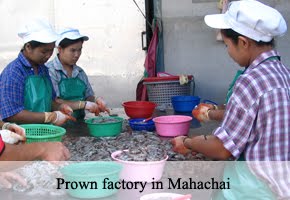
When the girls arrived in Mahachai the broker placed them at Wa La Pon, a Thai owned prawn-packaging factory. For 2 years, with a small and inconsistent salary, the girls worked in fear and confusion. “I missed my parents and I wanted to go back to my home, but I could not go, I had no money for travel cost and I was terrified of my boss,” said Ma Than.
Ma Cho and Ma Than shared a small apartment attached to the factory. 7 days a week they worked from 2am to 10pm, yet they received different salaries and often had to pay their boss random fees. Ma Than explained, “We didn’t understand how our boss paid us. He would give me 800 baht for 10 days, but then he’d subtract 500 baht for a work permit card, but I never received a work permit card.”
The factory provided 3 meals a day or employees could cook for themselves and receive a slightly higher salary. Ma Cho cooked her own food and was paid 1200 baht every 10 days and 500 baht was subtracted for a work permit card she never received. Work permit cards cost 3600 baht per year, plus 400 baht for photos and processing fees.
On average, after work permit card fees were subtracted, Ma Cho was earning 2100 baht a month (70 baht a day) and Ma Than Htwe was earning 900 baht a month (30 baht a day). Over the 2 years 12,000 baht was subtracted from each girls salaries for non-existent work permit cards.
Ma Cho, a short and slender girl, expressed frustration over her previous employment, “I worked…but I couldn’t send money to my parents…Before I went there I thought I could support my parents but I had nothing…We had no holiday and no time to relax. If someone felt sick and could not work for 5 days, our boss would subtract 1000 baht from their salary.” Their boss would also demand 200 baht from employees if they forget to wear surgical masks while packaging prawns.
Ma Than and Ma Cho also had problems communicating with their boss. “I cannot speak Thai, so it was very difficult to live in Thailand. When the boss told me to do something I didn’t understand and he would get very angry with me and I was so scared of him,” said Ma Cho.
Their boss regularly controlled whom they contacted and interacted with inside and outside the factory. Ma Than said, “We could not call our relatives or friends because our boss wouldn’t allow us to use the phone. If we called our friends, he assumed we were trying to get new jobs at another factory. We could not talk with each other [during work] because the Thai boss didn’t like it and we couldn’t look at his face, if we did, he’d curse at us.”
Wa La Pon has 600 migrant workers, all are Mon or Burman and only some can speak Thai, but most cannot understand a word. All factory employees work from 2am until 10pm although none have work permit cards or a consistent salary. At a neighbouring factory in Mahachai, employees work from 8am to 8pm 6 days a week, are regularly paid 203 baht per day and long-term employees are paid 240 baht per day.
“There were many problems there. We were always worried that the Thai police would come to check the factory and arrest us, but we could not say anything to our boss because we were terrified of him,” said Ma Than.
During the first week of October 2009, the Thai police came to the factory to check for migrant workers’ work permit cards. Ma Cho and Ma Than still had not received theirs and were, along with several other employees, immediately arrested. The women were detained at the local police station for a couple days and then moved to a safe house outside Bangkok.
After 10 days, the women returned to Mahachai for their court case, where they are still deliberating proceedings. Labour Rights Promotion network (LPN) is helping with translation (Mon to Thai) and when issues are resolved, Ma Than and Ma Cho will return to the safe house to make arrangements for their eventual return to Burma.
“Many migrant women workers are lied to taken advantage of by traffickers and factory owners, not only in Mahachai but in many areas of Thailand. But especially in Mahachai, they need many women…because women can work everywhere, restaurants, brothels, stores, houses, or factories. So many women come to work in Mahachai,” said a member of Rehmonya Labour Union (RLU), an organization that collects data about migrant workers.
In a similar circumstance, 2 Tavoy women were promised well paying jobs in a snack factory, but ended up working for low wages at a Massage parlour, in Ratburi, Thailand. The girls travelled to Thailand with a trafficker in June 2009 and their employer never provided them with work permit cards. Like Ma Than and Ma Cho they were arrested and detained by the Thai police until LPN was notified and could arrange for their release and transportation back to Burma.
As WCRP has repeatedly reported, trafficking of Burmese women to Mahachai and other towns in southern Burma is an increasing problem. There are not enough jobs to support the growing population in Burma and in response many women migrate to Thailand searching for work and a better life.
Read more...
Subscribe to:
Posts (Atom)